
On Weaponizing Narrative Infrastructure
How to build an indelible brand in the AI age
Going viral is the easy part.
The playbook for getting attention once is widely understood and increasingly commoditized. Launch videos. UGC armies. Social shows. A well-timed thread. Anyone decently resourceful with a good enough idea can manufacture a moment now.
What nobody talks about is what comes after. I've spent 10 years figuring that out, and I'm open-sourcing the playbook here.
How you build the systems, the community, the narrative infrastructure that turns a moment into a movement. How you sustain that momentum over a long time horizon and compound it into something the market can't ignore. That's the hard part. And it requires a person who can do things no single hire has ever been able to do on their own: build the story, build the channels, build the engine that runs them, and drive meaningful revenue while doing it.
The cost to build software is approaching zero. Every product can be copied within months. We all know creating a robust feature set and lovable user experience is now table stakes. The only thing that actually separates companies now is whether they can build lasting distribution. One viral moment won't do it. You need the whole system.
In 2020 I started a creative studio built on one thesis: the best ads are disguised as art. We believed launch videos were a way for unknown brands to create a big splash. Now cinematic launch videos are the current meta for startup launches. Everyone's doing them and throwing $150k at them like it's nothing, just to get a taste of what virality feels like.
From there I built an organic short-form agency that helped 200+ companies create viral content that converts. It scaled to $2M ARR. UGC programs and organic short-form are now widely understood as the most effective growth engine on the internet.
In January 2025 I joined FLORA as the first GTM hire, leading growth across marketing, sales, and community.
The product was genuinely ahead of its time and the founders were exceptional product thinkers.
My challenge was carving out our own part of the internet. Mindshare over market share. That was the only game worth playing. Creative professionals had a deeply apathetic view toward AI. Most of what models were producing was slop, and our ICP consisted of people who had spent their careers developing taste and craft. Watching a machine mimic that badly felt like an insult.
I remember sitting across from Natasha Jen, a Partner at Pentagram, a creative leader behind some of the most iconic brands in the world, and saying the words “Nano Banana Pro.” I watched her soul leave her body.
That's when I realized these people would never want to know the difference between Veo3 and Seedance. They wanted to speak their ideas into existence with a high degree of creative control. They wanted the complexity hidden and the control surfaced. That is exactly what FLORA gave them.
But there was another group entirely. The AI-native early adopters: agency owners, educators, freelancers who were already deep in the tooling, pushing the models to their limits before anyone else knew what they were capable of. Nascent, ahead of the game, and hungry. They lacked the taste and pedigree of the traditional creative professional. The traditional creatives had the taste but resisted the technology. Our real ICP lived at the intersection of both.
The AI-native early adopters became our distribution engine. The traditional creatives became our credibility. Together they created the social proof that made FLORA feel inevitable to the market.
Conversations like that are what gave me the story I needed to carve out our own space and cut through the noise.
“Most AI creative tools are being built by non-creatives for non-creatives who just want to feel creative. FLORA was built for professionals who have a deep reverence for the creative process.”
That line landed with both groups for different reasons. The AI natives heard it and felt seen. FLORA respected their craft and gave them control rather than taking it away. The traditional creatives heard it and felt understood for the first time by an AI company. Both groups recognized themselves in it. That's how you build a story that travels.
Our launch video ended up going viral on X and LinkedIn. I spent the next six months pressure-testing formats, understanding what messaging converts attention into belief, and which creators reliably move culture. Eighty thousand followers across channels, zero in ad spend.
After I got our owned media channels on autopilot, I built the Creative Partner Program. We wanted to accelerate our learnings across hundreds (eventually thousands) of people. We knew when the narrative hit someone, it created deeper belief and more conversion. If we could put that narrative weapon in the hands of an army of people who could shill on our behalf, it would amplify our efforts tenfold.
So we hand-picked 350 AI-native creatives: agency owners, educators, freelancers with deep networks and real influence inside large organizations. We gave them FLORA for free along with private Slack access, weekly workshops, office hours, and affiliate links so they could earn by referring it to their clients and audiences.
The insight: if these people used FLORA for their real work and fell in love with it, they would be compelled to share it online and offline. That's exactly what happened.
Eighty percent of our growth came from word of mouth via our launch videos and CPP. We never did outbound. The owned and earned engine drove $50M in enterprise pipeline. $5M Self Serve ARR in under a year. $42M Series A.
I found out later that what we built at FLORA mapped almost exactly to the playbook Elena Verna has been talking about publicly: giving away the product like candy, community as the primary growth engine, launching loudly and frequently, influencers as credibility amplification.
I naturally arrived at the same conclusions by doing the work. The lesson: the principles are real, and most companies still won't apply them because they're harder to measure than a cost per click.
Eventually, younger startups started copying our approach. Incumbents tried to follow our playbook, failed, and had to acquire our competitors. That is what happens when you build a brand that makes your approach feel like the future. The market has no choice but to follow. We created the category: The Intelligent Canvas.
The internet is a machine for propagating narratives. Ideas that spread do three things: they trigger an emotional response, they spark conversation, and they motivate people to take action. When all three are present, a narrative reaches escape velocity. When they're absent, no amount of spend ignites the flame. I refined that understanding across 200+ clients through my agencies and stress-tested it at FLORA against one of the hardest possible audiences. It worked.
Here's the honest part about what I got wrong.
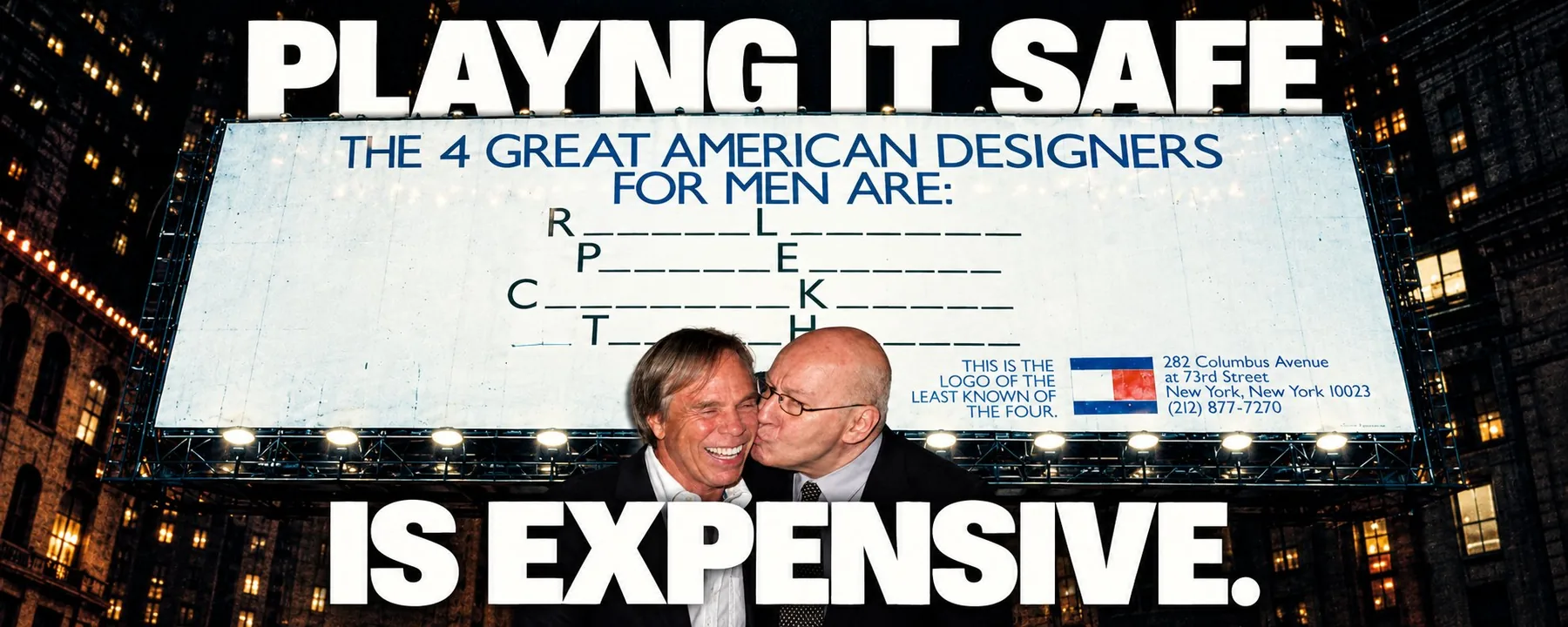
There were moments where the brand had real cultural energy and we pulled back and started to play it safe. After the Series A, the focus shifted (rightfully so) toward building systems that were measurable and repeatable. Attribution, paid media, conversion optimization. The things that give a scaling company confidence it can grow predictably. But in making that shift, the narrative work that got us there took a backseat. I wish I had fought harder to keep both running at once. The measurement layer on top, the cultural energy underneath, neither one replacing the other.
Because the real insight isn't about brand versus metrics. It's about keeping two things in parallel: shipping velocity and narrative velocity. Shipping constantly and announcing boldly at the same time. When those two are in sync, the market feels like something is always happening. People stay because the product keeps getting better and they feel like insiders on the journey.
When they fall out of sync, you feel it fast.
If you push hard on brand and content but stop shipping, the market turns on you. Customers care about one thing: are you solving their problem better than you were last month, and better than the alternative? Brand builds loyalty. Brand builds fandom. But brand cannot save a product that has stopped earning it.
Shipping is the proof. Narrative is how you make the proof land. The companies that become iconic do both, for the entire life of the company. Whop is a perfect example. They ship constantly and announce every single move like it's a cultural event. The product keeps getting better and the brand keeps getting louder. That compounding is not an accident.
Towards the end of my time at FLORA, founders started reaching out.
The most recent offer I got: $250k salary, 0.8% equity, seed stage company.
The founder's expectation: get them to $10M ARR in less than six months. From scratch.
I've had this conversation over and over. Massive expectation, minimal upside. Don't get me wrong, I appreciate the audacity and love a good challenge, but here is the math they are not running: if I get the company to $10M ARR, they raise an oversubscribed Series A worth $50M+. The founders walk away having multiplied their company's value ten times over. I walk away with less than $1M.
The ask has only expanded. The person founders are looking for now needs to have strong product sense, deeply understand the customer, build all the messaging and positioning, have a viral sense, define the category, build community, have taste, be technical enough to set up AI systems and chain together all the right agents, be analytical and data-driven, know which channels to prioritize and how to unlock them without burning cash, build brand identity from scratch, and optimize everything to drive meaningful revenue. Simultaneously. The GTM person is expected to be the entire commercial engine of the company.
The old GTM hire ran campaigns. The new one builds the systems that run them.
The old one wrote copy. The new one builds the agents that generate, test, and iterate on hundreds of variations while they sleep.
The old one reported on what happened. The new one built the infrastructure that tells them in real time.
The old one had a channel strategy. The new one has a distribution engine that compounds without them.
The job didn't get harder. It became a different job entirely. And the people who understand this are building their own companies.
Here is what nobody is saying out loud about why this is happening. Distribution is becoming the real differentiator. VC money is commoditized. Who you take it from matters less than what you do with it. The smartest people in the room are aligned: GTM and marketing are the scarcest and most valuable functions in the AI age.
And the talent to fill that role is disappearing. With AI making it possible for one person to build what used to require a full team, the A players aren't looking for jobs anymore. They're starting companies. You're not competing with other startups for this person. You're competing with the option of them just doing it themselves.
At some point the answer becomes obvious. What I've always loved is being close to multiple founders at once, going deep on different problems, seeing the patterns across companies. As an employee that's impossible. With AI as the backbone, it's not.
But the tools are only part of it. The other part is something you can't build overnight.
Over ten years I've built something I didn't have a name for until recently.
A network of people who never show up in the credits. The creative directors who built the campaigns everyone in the industry studied and copied but who have no public profile. The growth operators who took companies from zero to category but who prefer the work to the attention. The brand architects, the viral engineers, the community builders who are behind some of the most culturally significant things that happened on the internet in the last decade, and who are not wasting their time posting cringe takes on Twitter.
We are not influencers. We are not thought leaders. We do not jester for everyone's entertainment online. We do the dirty work, the details that make things brilliant, clever, and memorable. We are the puppeteers. We control what goes viral and what becomes culturally relevant. And most of the world has no idea who we are.
I refer to my network as the Internet's Illuminati.
I've spent a decade in rooms with these people. Learning from them, being shaped by how they think, building my own frameworks from everything they taught me. That compounded understanding is what I'm bringing to my next thing.
We are building the AI-native GTM co-founder firm. Two people. My brother and I. The narrative weapon and the operator who operationalizes it. Four companies at a time. We take equity. We only say yes to founders we'd be proud to be shareholders in.
We're calling it Indelible. The window is shorter than you think.