

What Drake's Iceman Rollout Means for Startup Launches
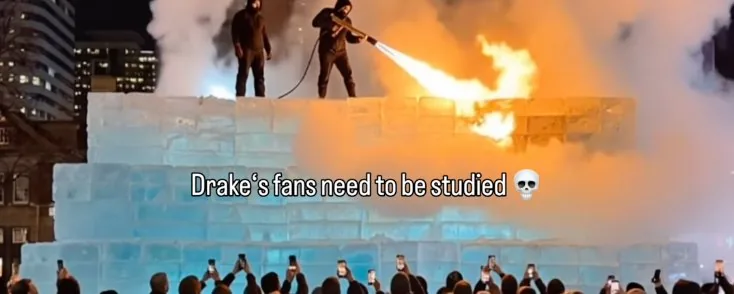
This week, a 15-foot wall of ice appeared in a parking lot in Toronto. No signage. No branding. Just coordinates Drake posted to his Instagram with one line: "release date inside."
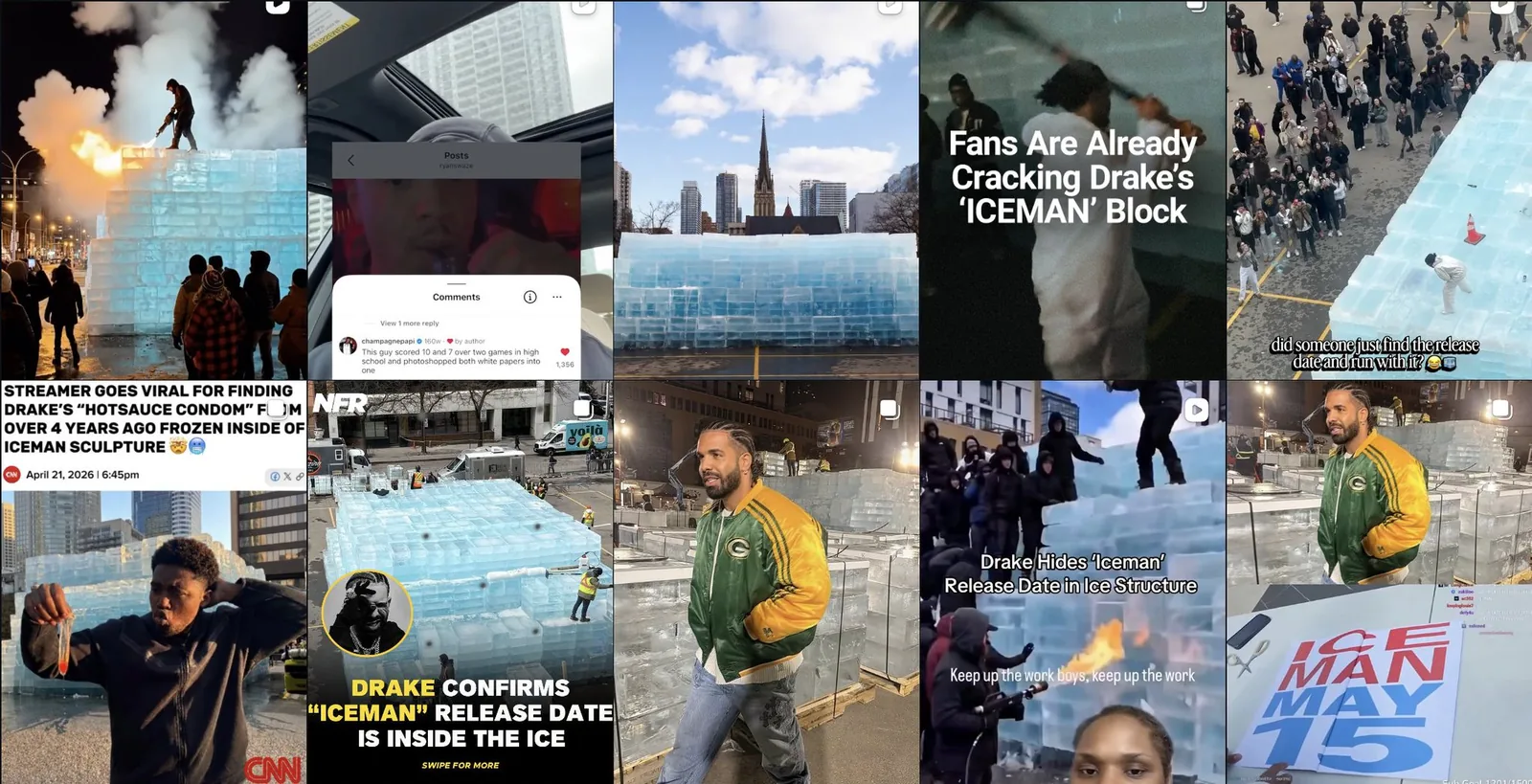
Within hours, people showed up with sledgehammers and blowtorches. People were climbing the structure and vandalizing it. Legacy media covered it. Creators livestreamed it. Clippers went insanely viral.
The reason it worked is because Drake hit the three things every viral culturally relevant moment does.
- It triggered an emotional response.
- It fostered conversation, online and IRL.
- It motivated people to take action.
Most launches hit one, maybe two. Now his highly anticipated album is even more hyped, and the mechanics behind what makes it bang is more replicable than you think.
This is enough sauce for me to predict that IRL stunts are the next meta in startup launches. To make the case, I need to do two things: explain why the current meta is cooked, then break down what makes the new one work.
Launch videos turned into a template.
Robinhood wrote it. Friend made it the shiny object. Cluely made it more accessible. The format is now so repeatable that anyone can copy it, and the actual distribution comes from influencers and your network reposting in the first 24 hours to help it reach escape velocity. The work doesn't have to be good. It just has to get reposted.
I am not saying launches shouldn't be orchestrated. The issue is that when the concept itself is mid, no amount of orchestration makes your company interesting. Founders chase "1M views" but the eyeballs don't convert into anything meaningful. The only thing that matters is audience-product fit — whether the people watching are the people you're building for. A million wrong views is worse than 100k right ones. Not all views are created equally.
The most iconic creative deeply resonates. The best ads are disguised as art. That's how you cut through the noise.
Drake's Iceman is a brand activation disguised as an art installation. Any startup can run a version of this. It isn't gated by budget or fame. It's gated by concept. Here's what's happening underneath:
The concept has to beg a question.
A launch video answers everything in 60 seconds. The ice block answers nothing. How long until it melts? Could Drake’s lookalike be hiding in there? The unanswered questions are the imagination engine. It's what gives people a reason to keep checking back, keep posting, keep speculating, keep returning to the parking lot. Build a moment with an open loop and people will fight to close it for you.
The artifact has to do the talking.
Drake could have tweeted "new album dropping soon." Instead he built a 15-foot wall of ice and let it speak for itself. The object made the announcement. The text on his Instagram was secondary.
A typical launch makes the words do the work and the visuals support them. A real stunt inverts that. The artifact becomes the message, and the words are just there to point people toward it. A real stunt lets the concept earn its audience first and reveals the brand on the back end. Try to think: what would Banksy do?
Ambient discovery has to be engineered.
Drake put the ice in an area with a high density of foot traffic. People who weren't fans walked past it on the way to lunch. Some saw it online first and went IRL. Others saw it IRL and went online. Both loops fed each other. A launch video can only live in one place. A stunt can be omnipresent, and the friction between online and IRL is what builds momentum.
The moment has to be built for the remix.
Design the moment so that anyone who encounters it,in person or online, has something worth making content about.
There are three variables you control: the visual, the story, and the timeline. The visual has to be obvious enough that anyone with a phone gets a usable shot. The story has to be meme-able enough that posting about it feels like a free win for the creator. The runway has to be long enough that the market can keep finding new angles to post about/commentate on.
Drake's ice block hit all three. You seed the moment with your network to kick the flywheel. Once it's spinning, algorithms take it the rest of the way. Seeding is the accelerant. The thing itself is the engine.
The moment has to polarize.
The danger signs warning people not to touch it became part of the spectacle. Some called it brilliant. Others called it wasteful, irresponsible, a Toronto eyesore. That's the point.
Launch videos are engineered to be liked by everyone, which is exactly why they're mostly forgotten. Most founders don't have the stomach for the discourse a real stunt creates. The few who do will clean up.
The audience has to become the participant.
This is the layer most brand activations never hit. Forget stupid lead magnets that get people to comment some BS keyword for engagement or paying influencers to quote tweet your launch video. Do something that motivates action.
In this case, people started showing up with tools, attempting to break into the thing. That's the highest form of fandom. It's civic engagement around a piece of culture. When your audience starts advocating IRL, not just watching things, the brand stops being something they consume and becomes something they're part of. I call it Experiential Marketing as Participatory Art.
The success metric is simple: photos circulate without explanation, you get typecast as "the team that did that stunt," and if the message outgrows the brand it could even spin off into its own IP. Worst case it gives you a library of owned and earned media to create and mine for months.
The inevitable objection here for why this worked is “yeah but he's Drake.” Wrong. Most celebrities and brands pour millions into big campaigns every year and they fail miserably. Fame is a multiplier, not the engine. Concept is the engine. Drake could have done something forgettable. Instead he did something so outlandish that the idea itself carried the mass. A startup with no celebrity attached can run the same playbook, as long as the concept earns it.
For every startup currently pouring half their seed check into a launch video that will be forgotten in 10min: I implore you to think of edgy ways you can cut through the noise. Find something your ICP will actually rally around. Make them so fired up that they become the superusers of the product and the superfans of the brand. That kind of distribution compounds.
This is what “new media” was meant to be. It’s not hiring a "Chief Clipping Officer" or figuring out your livestreaming play. It’s building moments that move people.
I'm confident this becomes the next meta because I've spent my career pioneering new metas years before it became the meta.
Meme and faceless accounts in 2015. Launch videos in 2018. Organic short form in 2019. IRL stunts combine the leverage of all three on steroids.
The first few teams to absorb this and run with it will be studied by world-class creative teams and in Harvard lecture rooms. Then the new meta will be defined.
I'm already executing on these with a select few brands. HMU if you're down to run it.
Follow me for more pieces like this. Or don’t and chase the new meta only after it becomes wack.